Mold Air Testing & Spore Trap Analysis
Volumetric air testing is the gold standard for assessing indoor environmental ecology. Utilizing calibrated vacuum impaction at 15.0 liters per minute, Envirogyn captures airborne bioaerosols and quantifies fungal concentrations (Spores/m³) under ASTM D7391-20 optical microscopy to detect invisible amplification reservoirs.
What You Can't See Can Hurt You.
Most mold spores are microscopic—measuring between 2 and 20 microns in diameter. Even if structural surfaces and baseboards appear immaculate, your breathing zone may harbor millions of elevated fungal particulates. Air testing is the only scientifically definitive method to quantify the exact airborne concentration of mold spores in an occupied interior.
Envirogyn deploys calibrated Spore Trap Analysis, the recognized benchmark for industrial hygiene. By mathematically contrasting indoor room samples against an outdoor geographic control baseline, we determine whether your property exhibits normal ambient ecology or a hazardous active microbial amplification requiring engineered remediation.
Precision 4-Phase Air Sampling Protocol
We adhere strictly to ASTM D7391-20 standard test methods for optical categorization and quantification of airborne fungal structures, ensuring defensible data for Texas real estate closings and insurance claims.
Rotameter Flow Calibration
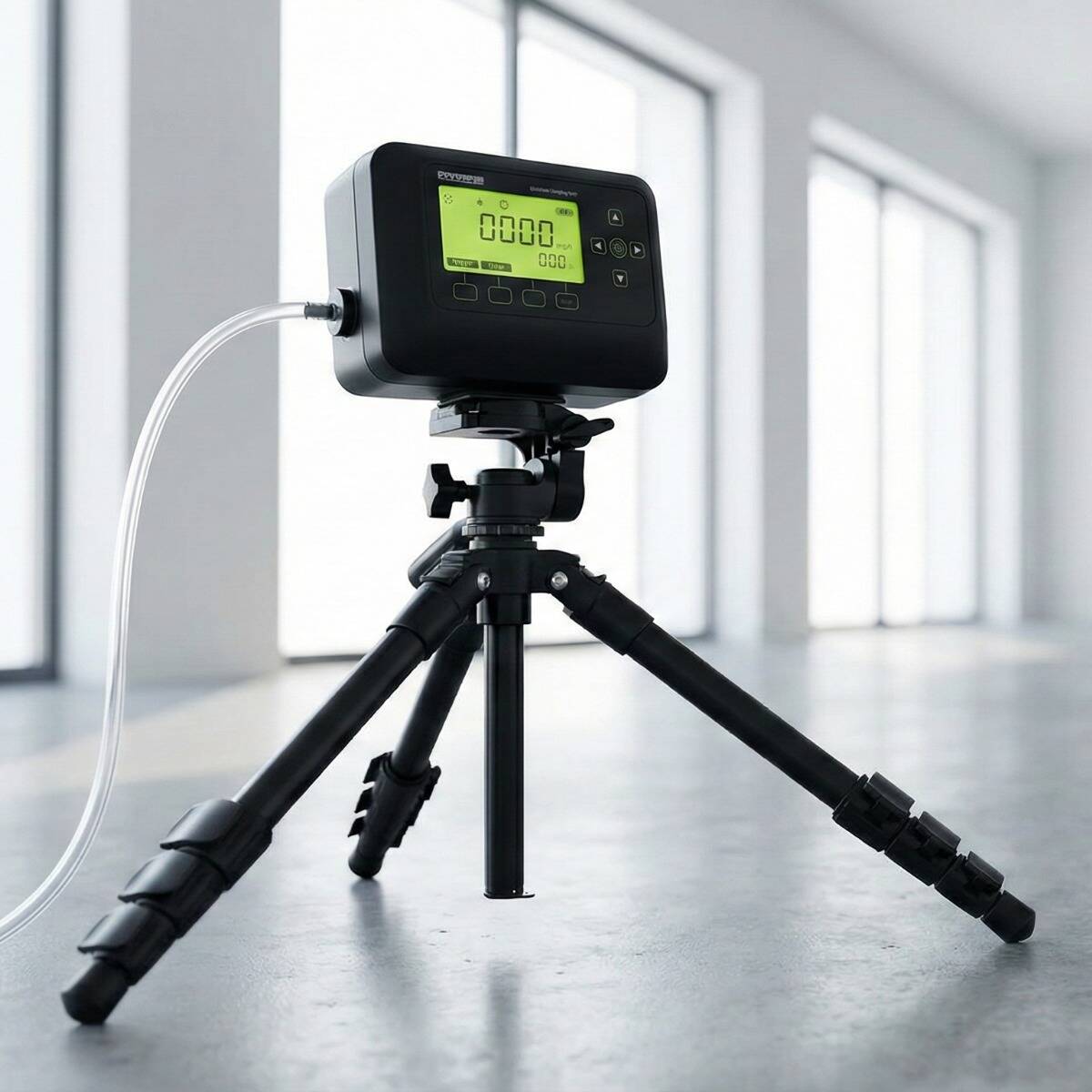
We calibrate high-volume vacuum pumps on-site using precision secondary rotameters to draw exactly 15.0 liters of air per minute for a precise duration (typically 5 to 10 minutes), establishing a known volume of air (75 to 150 liters).
Outdoor Control Sampling
We collect concurrent outdoor control samples upwind and downwind of the building envelope. This documents the ambient regional fungal baseline, accounting for seasonal weather spikes and natural background flora.
Zonal Indoor Impaction
Air cassettes are positioned in suspected rooms (Areas of Concern), HVAC return plenums, and unaffected reference zones. Spores impact directly onto a specialized optical grease substrate at high velocity.
Forensic Optical Microscopy
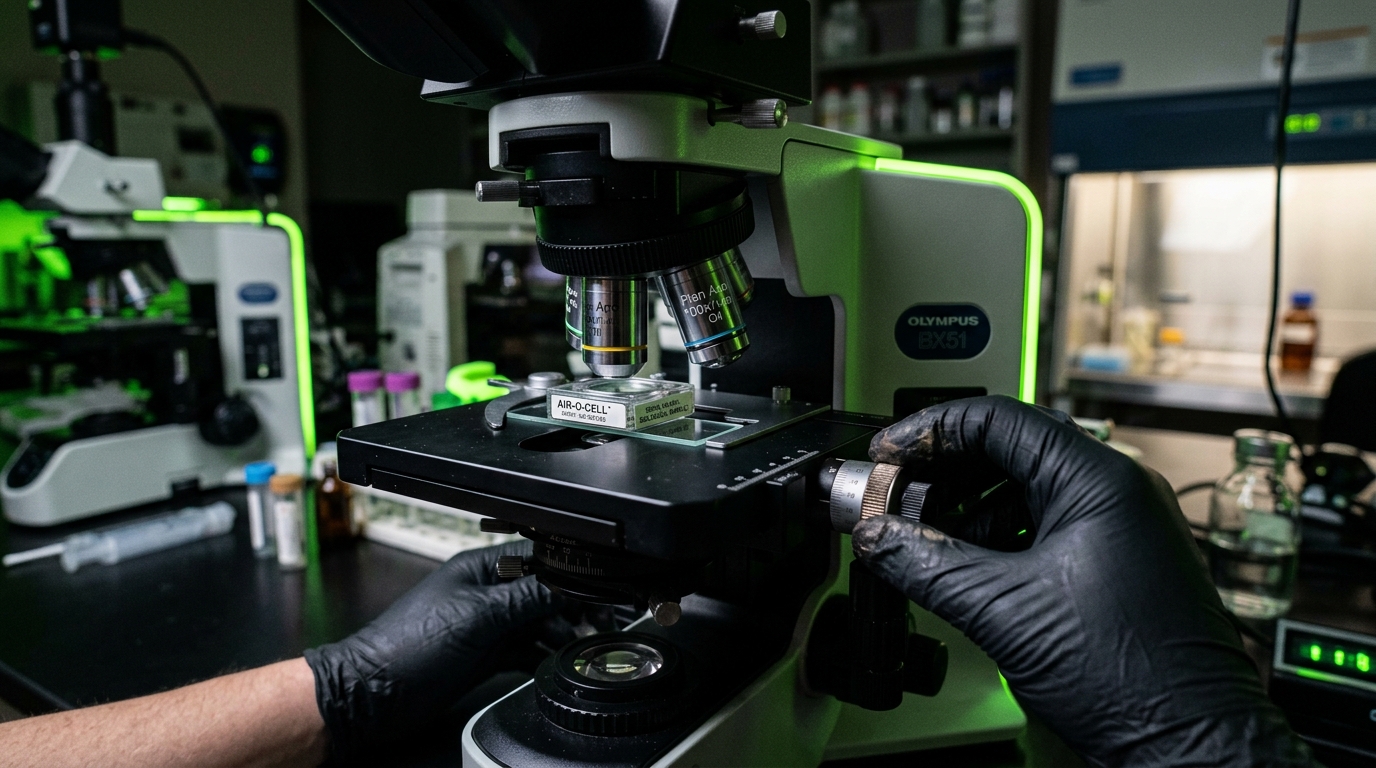
Inside TDLR LAB #1050, licensed mycologists perform 100% transverse trace scans under 400x/1000x oil immersion. Raw spore counts are converted to Spores/m³ and cross-referenced with IICRC S520 ecology definitions.
When Is Mold Air Testing Indicated?
Air testing provides objective scientific evidence when physical visual cues are absent, contested, or legally disputed.
Persistent Musty Odors
When you detect a musty, earthy smell but cannot observe visible mold, bioaerosol air testing detects microbial volatile organic compounds (mVOCs) and elevated spore counts escaping from wall cavities or crawlspaces.
Unexplained Respiratory Symptoms
If family members or office staff suffer from chronic coughing, sinus pressure, skin irritation, or asthma flare-ups that subside when away from the premises, volumetric air analysis verifies the biological airborne vector.
Real Estate Transactions
Protect earnest money deposits and capital investments. Independent air testing provides buyers, lenders, and title underwriters with indisputable verification of indoor air quality before contract closing.
Post-Water Damage Clearance
Following pipe bursts, roof leaks, or Gulf hurricane storm surges, air testing confirms that structural drying equipment prevented secondary mold spore colonization on wet wall assemblies.
Post-Remediation Verification (PRV)
Under Texas 16 TAC § 78.68, remediation contractors cannot self-certify their work. An independent Mold Assessment Consultant conducts PRV air testing to certify clearance and issue Texas TDI Form MDR-1.
ASTM D7391 Spore Concentration Interpreter
Simulate the mathematical conversion of raw microscopic spore counts into volumetric concentrations (Spores/m³) and evaluate IICRC S520 ecological condition classification.
Air Testing Technical Intelligence
Scientific answers to common client questions regarding sampling velocity, spore viability, and ecological interpretation.
How long does the test take?
The physical sampling process takes approximately 30 to 45 minutes on-site for a standard residential or commercial floorplate. Because Envirogyn operates an accredited in-house microbiology laboratory (TDLR LAB #1050), diagnostic microscopic results and complete Certificate of Analysis packages are typically delivered within 24 hours of sample receipt. Same-day 3-hour emergency STAT bench service is available for active real estate closings.
Does this detect dead mold?
Yes. Optical spore trap analysis captures both viable (living) and non-viable (dead or dormant) fungal structures. This is a critical diagnostic distinction: retail petri-dish settle plates only culture viable spores and frequently fail to grow fragile toxigenic molds. Both living and dead spores carry cellular beta-glucans and mycotoxins that trigger adverse immunological reactions in occupants.
What is a "Normal" mold count?
There is no single universal or statutory "safe number" because ambient outdoor mold spore levels along the Texas Gulf Coast fluctuate from 500 to over 50,000 Spores/m³ depending on rainfall and wind. Instead, we interpret results by comparing the indoor room ecology against the concurrent outdoor baseline. Under ANSI/IICRC S520 Condition 1 guidelines, indoor airborne counts should be lower than outdoor air and reflect an identical or cleaner taxonomic distribution.
Pair Air Testing with Direct Diagnostics
Mold Surface Test (Direct Exam)
Confirm visible surface staining and discoloration via Bio-Tape lift slides and sterile swabs. Our in-house laboratory identifies fungal hyphae, fruiting structures, and spore viability.
SURFACE TEST PROTOCOL →Full Mold Assessment & Protocol
Comprehensive forensic moisture survey by a TDLR Licensed Mold Assessment Consultant (MAC #1544). Includes FLIR radiometry, psychrometric mapping, and legally binding Remediation Protocols.
FULL ASSESSMENT SCOPE →Breathe Easier Today.
Don't guess about your indoor air quality or risk toxic exposure. Secure definitive scientific proof from our TDLR licensed microbiology laboratory.
REQUEST AIR TEST →Certificate of Mold Remediation
Upon successful post-remediation clearance, receive an official Certificate of Mold Damage Remediation protecting property resale and insurability.
EXPLORE CMDR PROTOCOL →Mold Assessment Consultant
Protecting health and property through licensed environmental diagnostics, unbiased protocol engineering, and zero conflict of interest.
CONSULTING SERVICES →