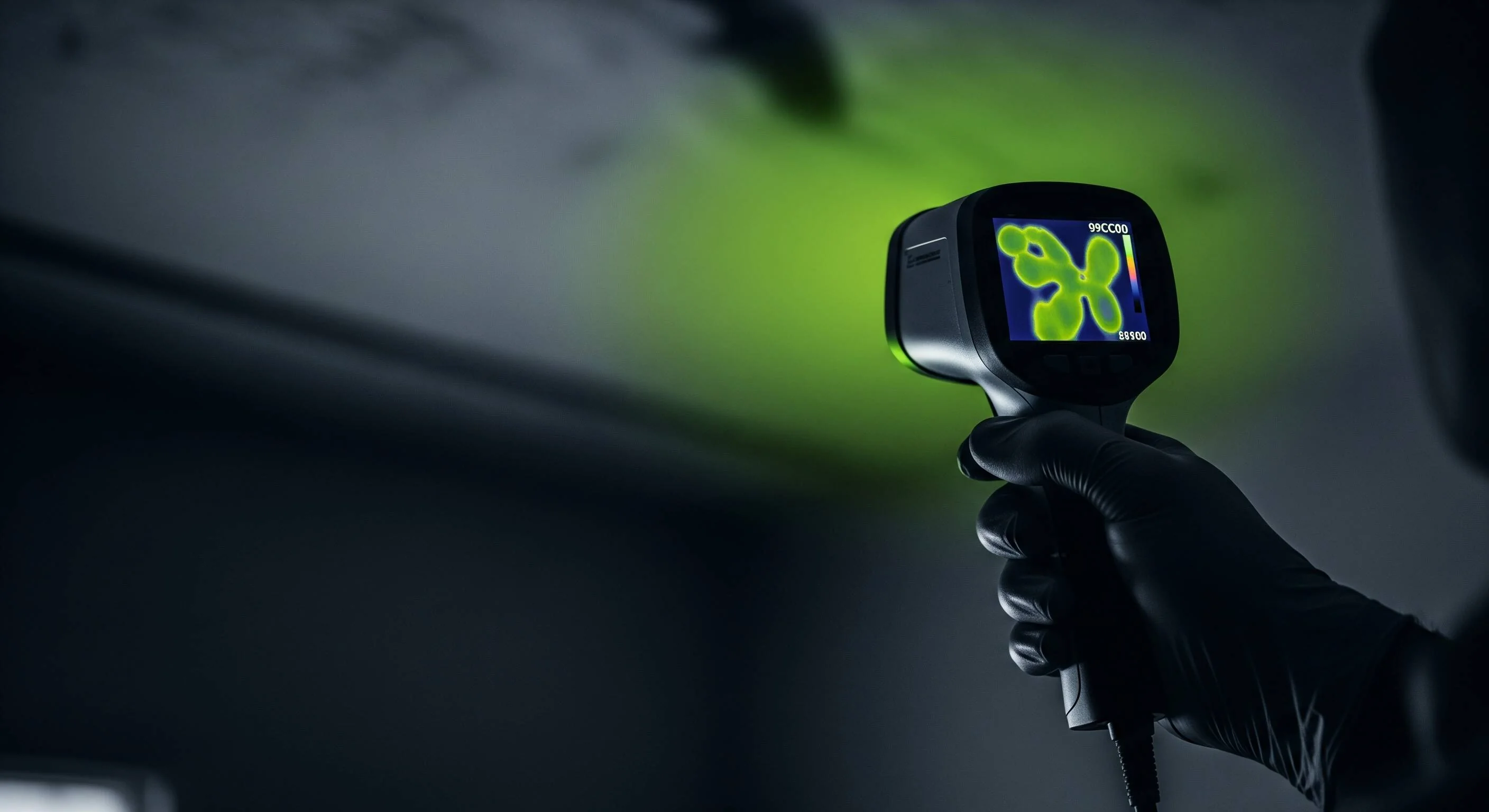
Licensed MAT Field Forensics & FLIR Thermography
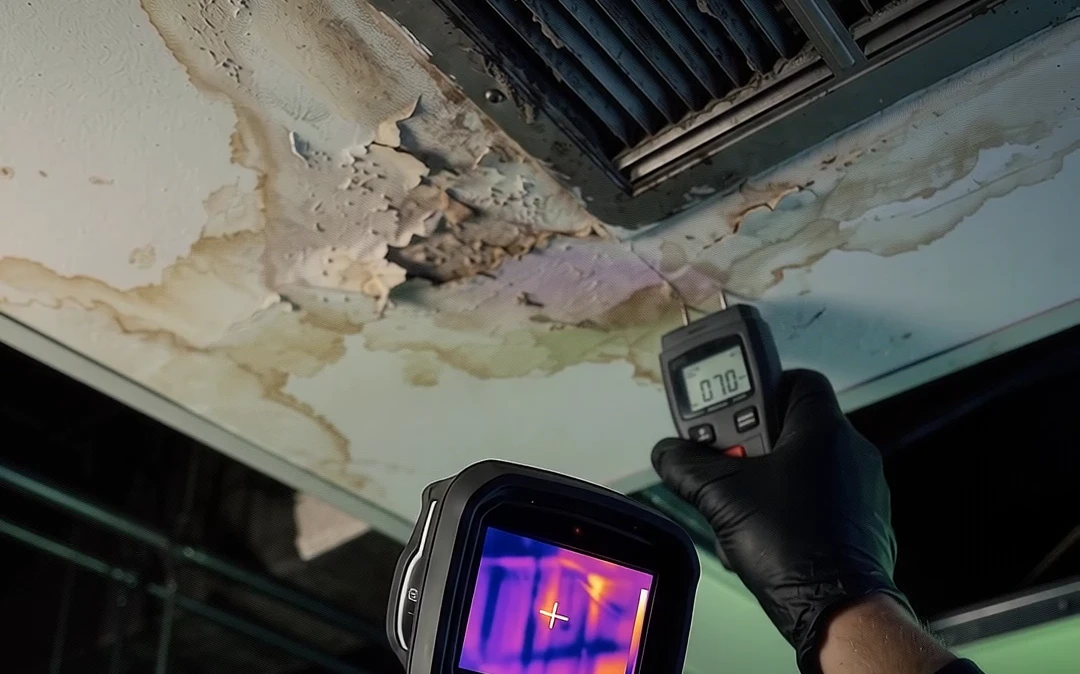
Mold is an ecological symptom; moisture intrusion is the root cause. Envirogyn's licensed Mold Assessment Technicians (MAT) and Consultants (MAC) deploy calibrated radiometric FLIR thermal imaging cameras and dual-depth moisture scanners to identify concealed leak sources behind walls without unnecessary destructive demolition.
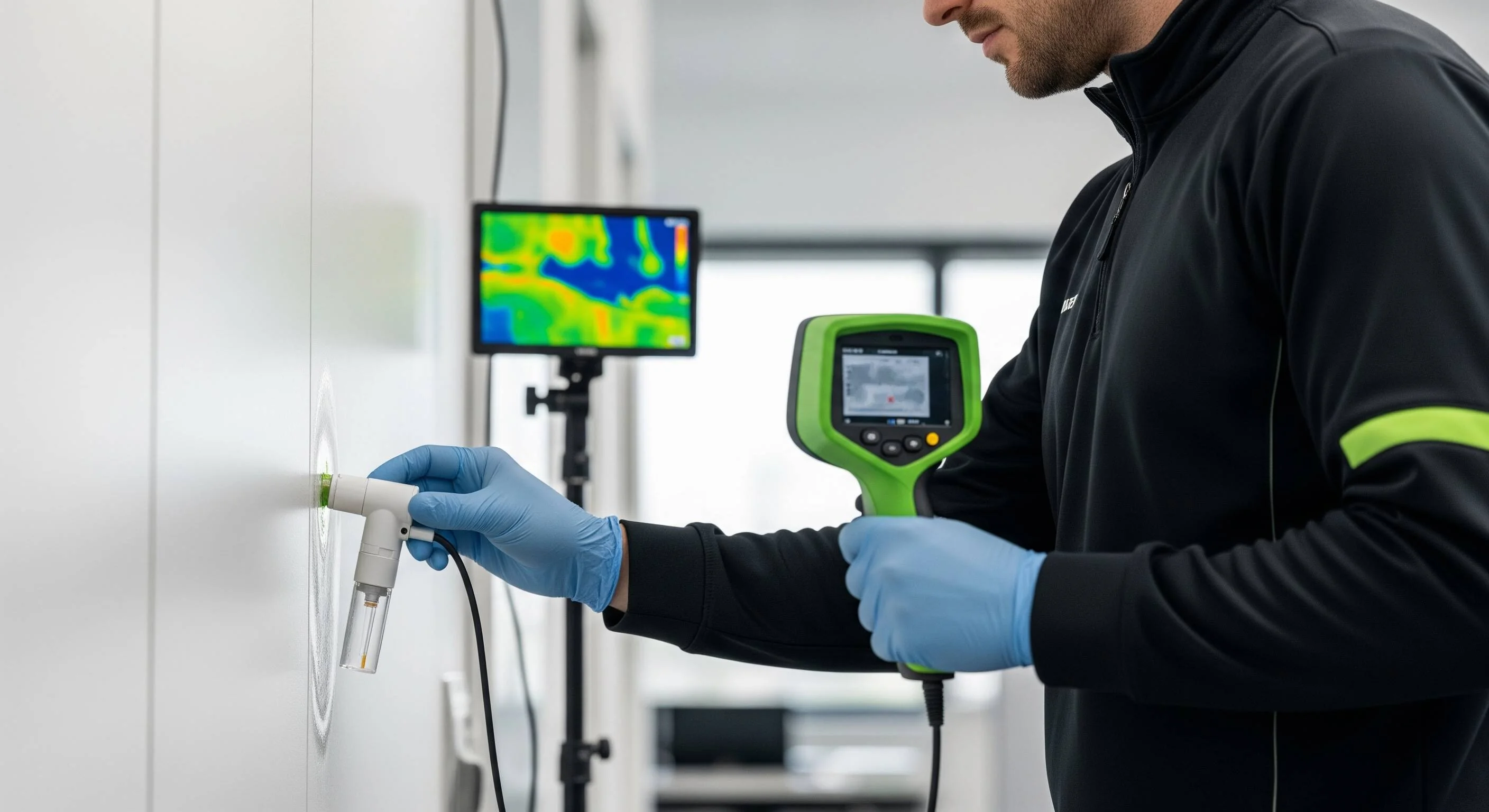
Licensed Field Assessment Protocols
Under 16 TAC § 78.50, our licensed technicians map structural envelopes, inspect HVAC air handlers and duct plenums, calculate relative humidity and dew point spreads, and log psychrometric moisture differentials across building assemblies.
- • Systematic visual inspection of crawlspaces, attics, and interstitial cavities
- • HVAC air conveyance system microbial fouling audits
- • Digital fiber-optic micro-camera borescopes for wall interiors
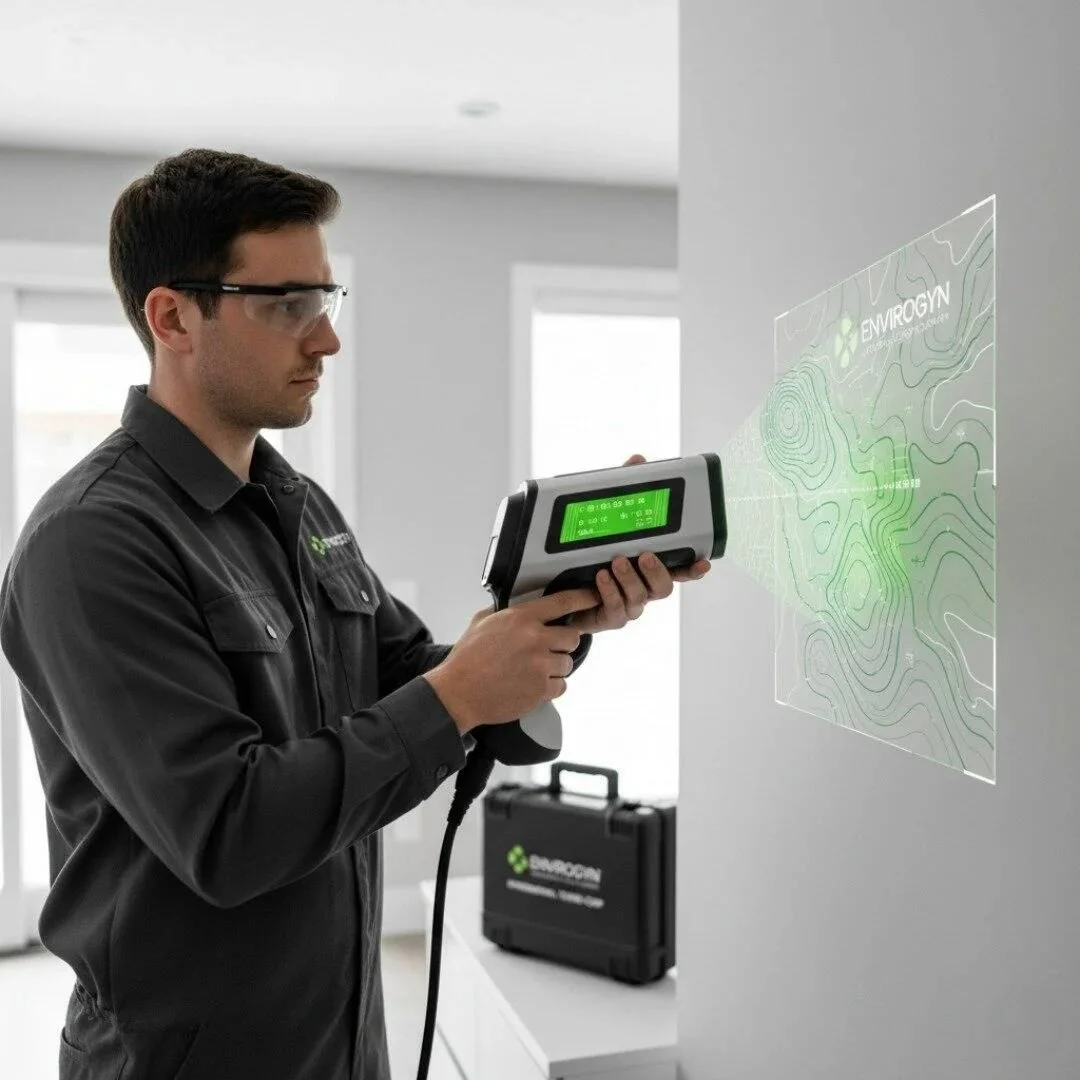
Quantitative Moisture Scanners (% WME)
Deploying non-invasive radio frequency impedance scanners and deep-penetrating resistance pin probes to measure Wood Moisture Equivalent (% WME). Moisture levels > 16% indicate elevated risk; levels > 20% support active fungal proliferation.
- • Non-destructive RF capacitance depth scanning up to 1.25 inches
- • Insulated deep-wall pin probes for framing stud equilibrium
- • Concrete subfloor relative humidity sleeves (ASTM F2170)
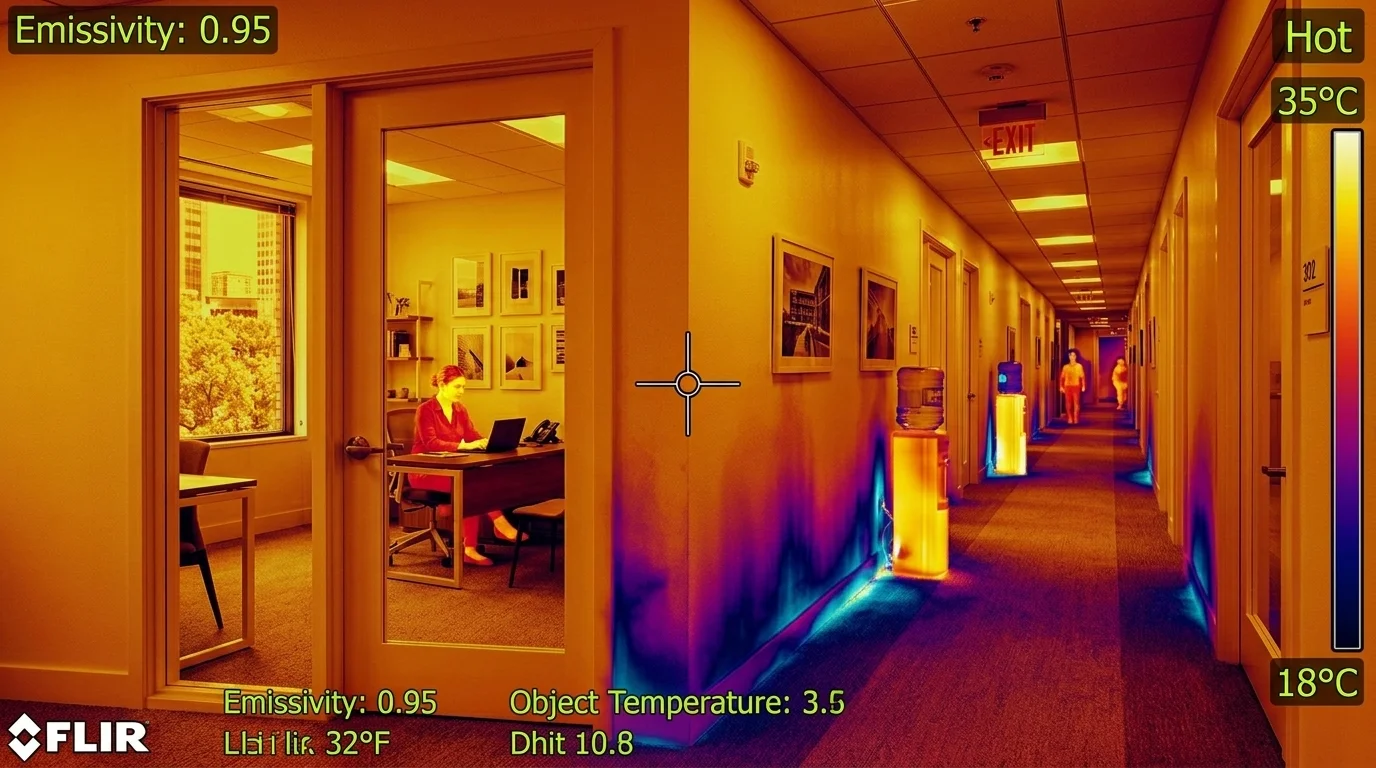
Active evaporative cooling creates dark purple thermal cold spots revealing water leaks behind sheetrock.
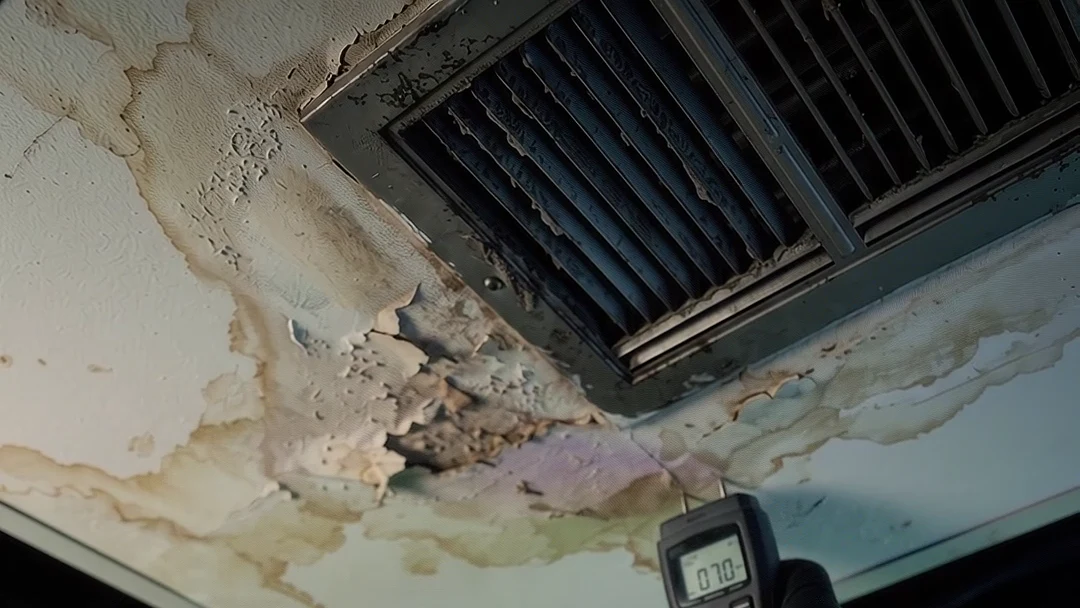
Surface drywall appears completely clean and unblemished, hiding active toxic microbial colonization inside cavity.
Calibrated Bioaerosol Air Sampling Rig
Air sampling without precision rotameter calibration produces invalid legal evidence. Envirogyn deploys professional high-flow vacuum sampling pumps on tripod rigs calibrated to exactly 15.0 Liters per minute with digital secondary flow standards.
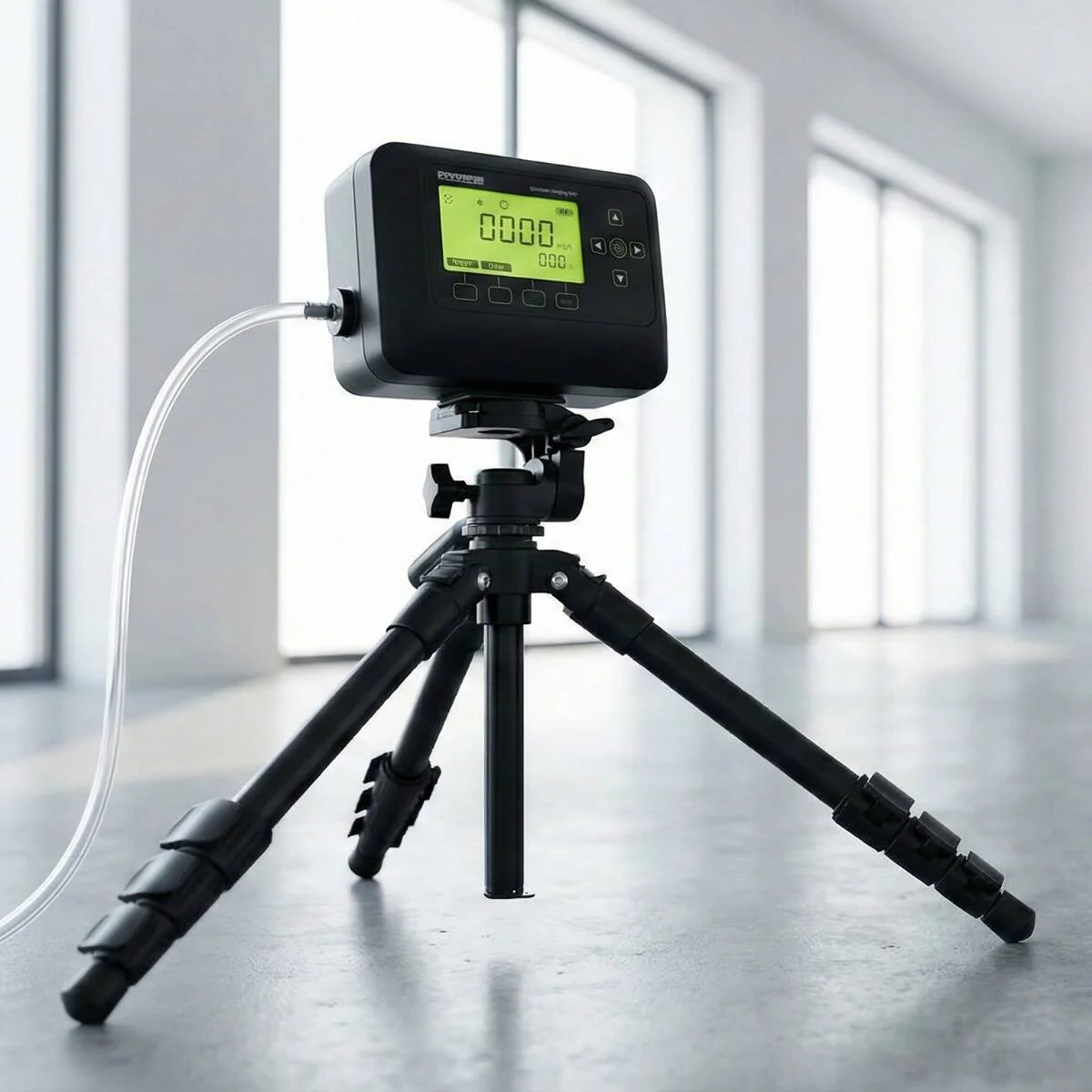
ASTM D7391 Air Sampling Protocol
Airborne fungal spores are captured on silicone-coated glass impactor slides within Air-O-Cell and Allergenco cassettes. The precise 75-liter air volume ensures analytical detection limits down to 13 spores/m³.
Under Texas TDLR rules, every indoor assessment must collect paired outdoor baseline samples to account for ambient Gulf Coast fungal ecology.
Direct contact sampling of suspected hyphae and conidiophores confirms active colonization versus superficial settled dust.
Direct courier handoff to our state-accredited microbiology bench for 3-hour STAT rush results, eliminating commercial lab delays.
The Statutory Mold Remediation Protocol Blueprint
In the State of Texas, a mold remediation contractor cannot legally begin work on a project of 25 contiguous square feet or greater without an engineering Protocol Blueprint authored by an independent licensed Mold Assessment Consultant (MAC). Envirogyn authors binding, court-defensible remediation specifications.
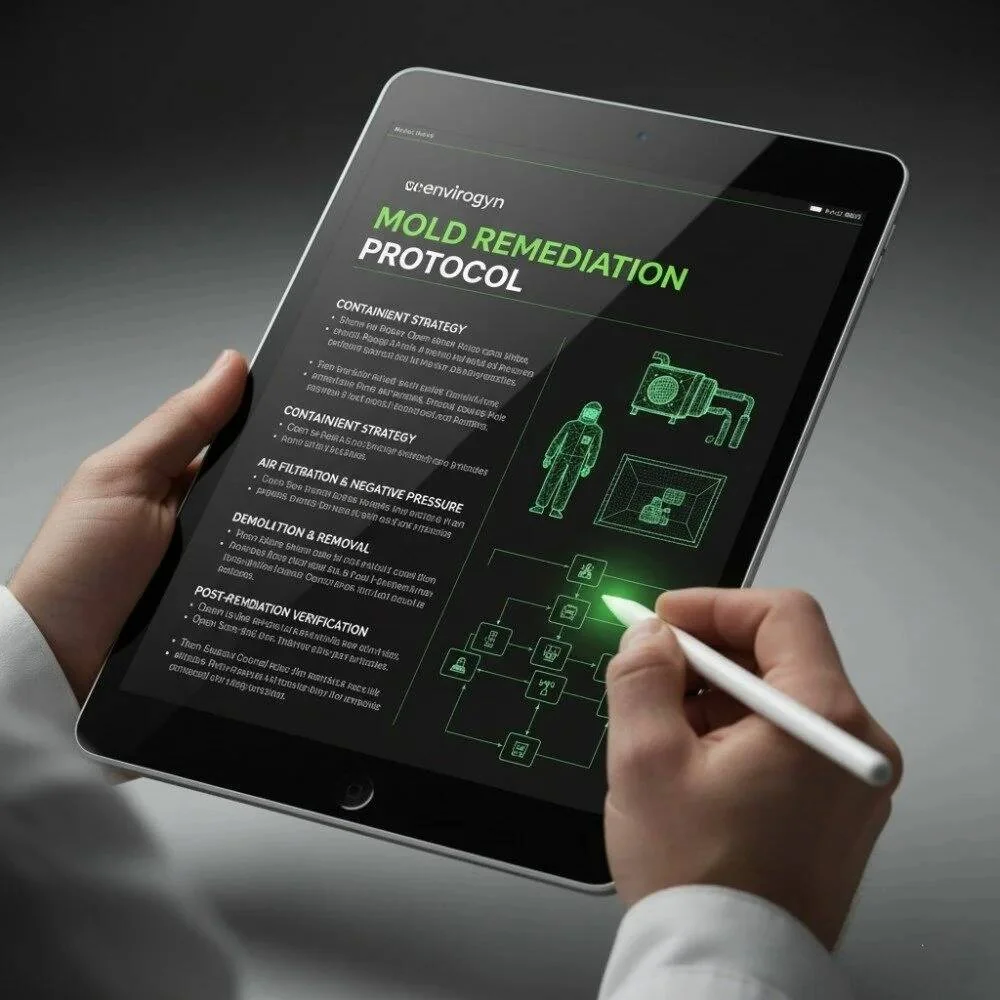
Required Blueprint Engineering Specs
Under 16 TAC § 78.54, our protocol blueprint dictates the contractor's scope of work with zero room for cutting corners:
- • Critical Containment Boundaries: 6-mil flame-retardant poly sheeting and zippered 3-stage decontamination chambers.
- • Negative Air Pressure Dynamics: Mandating continuous negative pressure differential of -0.02 to -0.03 inches water column.
- • HEPA Filtration Exchange Rates: Calculating exact airflow CFM to achieve ≥ 4 to 8 Air Changes per Hour (ACH).
- • Material Disposition Schedule: Clear demarcation between porous materials for removal, semi-porous for sanding, and non-porous for bio-washing.
- • Objective PRV Clearance Criteria: Explicit bioaerosol limits required to sign off on state insurance forms.
TDI Form MDR-1 Post-Remediation Clearance
The ultimate deliverable of a successful remediation is the Certificate of Mold Damage Remediation (TDI Form MDR-1). The remediation contractor executes Section 1, but only an independent licensed Mold Assessment Consultant (MAC) can execute Section 2 (Post-Remediation Clearance).
The 4-Stage PRV Inspection Gate
Before containment poly is taken down, Envirogyn performs rigorous independent verification:
White glove optical check. Zero dust, residual mold, debris, or moisture staining inside containment.
All exposed structural framing studs must verify ≤ 15% Wood Moisture Equivalent (% WME) to confirm complete structural drying.
Air sampling inside containment under negative pressure. Spore trap concentrations must be statistically lower than outdoor baseline, with zero toxic marker species (Stachybotrys or Chaetomium).
Envirogyn executes Block 10 of TDI Form MDR-1, providing the official state seal restoring property insurability.
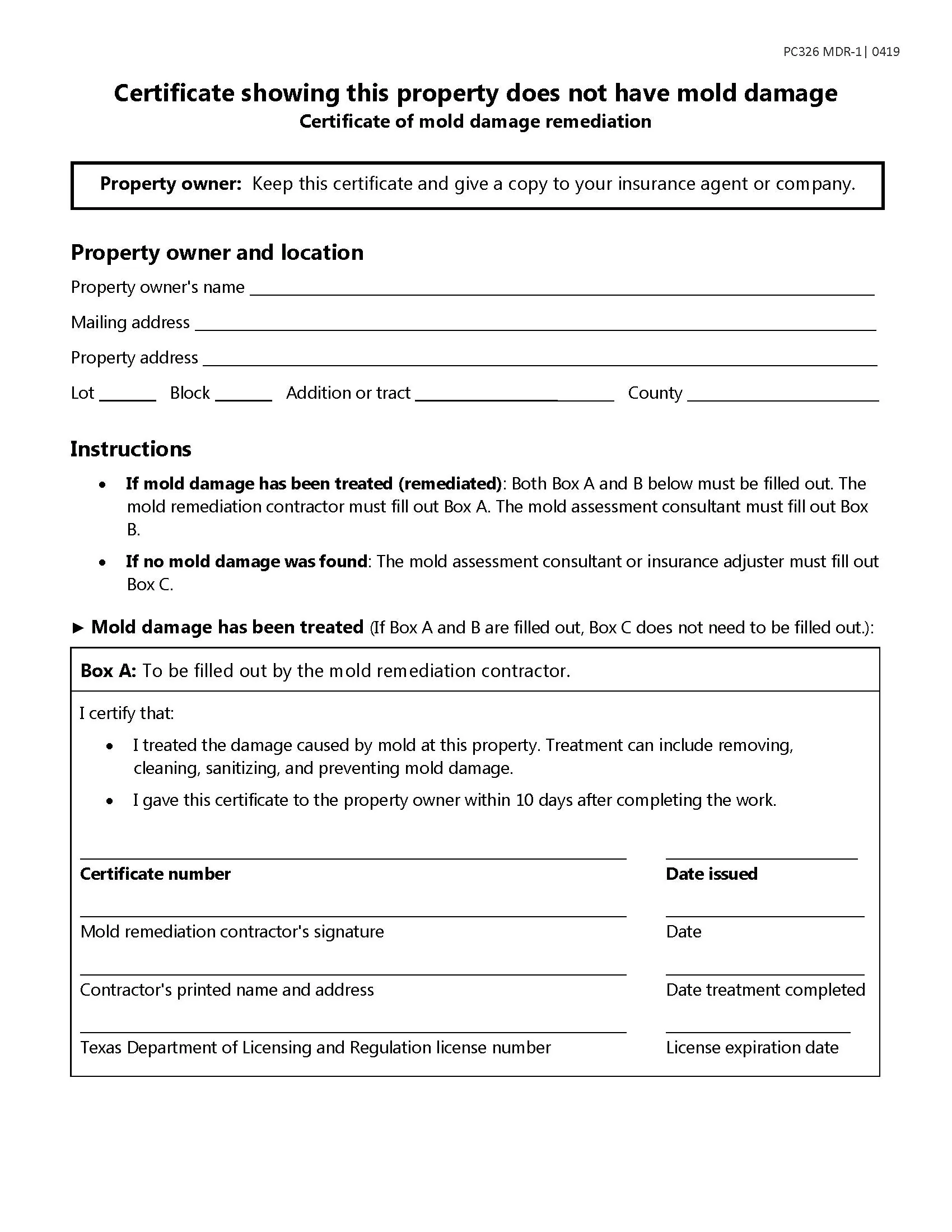
Consumer Immunity Against Policy Cancellation
Under Texas Insurance Code § 544.303, an insurer may NOT make an underwriting decision, refuse to bind coverage, or increase homeowner insurance premiums based on prior mold damage or mold claims if a Certificate of Mold Damage Remediation (TDI Form MDR-1) has been issued for the property.
The Texas No-Conflict Guarantee Firewall
Texas state law strictly prohibits a company from writing the mold assessment/protocol AND performing the remediation on the same regulated project (≥ 25 contiguous sq ft). Envirogyn maintains an unbreachable ethical firewall, protecting property owners against predatory practices.
The "Free Mold Inspection" Trap
Unscrupulous contractors offer "free mold tests" only to discover exaggerated contamination and pitch $15,000+ demolition contracts. Because they test their own work, their "clearance certificates" are legally worthless, inadmissible in Texas courts, and rejected by insurance underwriters.
100% Unbiased Scientific Certainty
Envirogyn has zero financial interest in whether a project requires remediation or not. If your home has normal fungal ecology, we state it definitively. If remediation is required, our protocol forces the contractor to bid on tight, defensible specifications, preventing inflated contractor billing.
Check Your Property’s Legal Requirements Under the Texas 25 Sq. Ft. Rule:
Recommended: Non-Invasive FLIR Thermal & Bioaerosol Assessment
Before anyone opens a wall, a licensed Mold Assessment Consultant (TDLR MAC #1544) scans your ceiling and drywall with FLIR infrared cameras, pinpoints moisture with dielectric meters, and runs calibrated Air-O-Cell spore traps.
What Does My Inspection Include & How Long Will It Take?
See How We Measure Before Anyone Touches Drywall
Tailored Protection for Homeowners, Buyers & Families
Documenting Sudden Water Losses for Adjusters
Insurance adjusters require objective proof of the moisture source and exact affected square footage. Our FLIR thermal radiometry, % WME moisture logs, and TDLR MAC #1544 protocol provide the exact scientific documentation carriers require.
Option-Period Speed & Form MDR-1
Under a tight 5-to-7 day Texas option period? Our in-house laboratory (TDLR LAB #1050) delivers 24-hour or 3-hour STAT spore results so you can negotiate repairs with facts—and close with an official Texas Form MDR-1 certificate.
Clinical-Grade Indoor Air Answers
Experiencing unexplained sinus, asthma, or fatigue symptoms at home? Directed by Dr. Charles Lehnhoff, PhD, MLS(ASCP)CM, our lab differentiates everyday outdoor pollen from hidden indoor water-damage molds like Stachybotrys and Chaetomium.
Mold Assessment Technical FAQ
What is the legal threshold for mandatory Mold Assessment Protocols in Texas? ▾
What is TDI Form MDR-1 and why is it essential for home sellers? ▾
How quickly can Envirogyn deliver laboratory spore trap results? ▾
Can my remediation contractor perform their own clearance air testing? ▾
What happens if containment fails Post-Remediation Verification (PRV)? ▾
Schedule a Licensed Mold Assessment Consultation
Deploy certified infrared diagnostics, air sampling, and legally binding Protocol Blueprints across Houston, Galveston, and the Texas Gulf Coast.