Mold Surface Testing & Direct Exam
Physical material sampling and high-magnification direct optical microscopy (400x/1000x) to confirm whether visible discoloration, stains, or fuzz constitute active fungal growth, dormant mycelium, or non-biological staining.
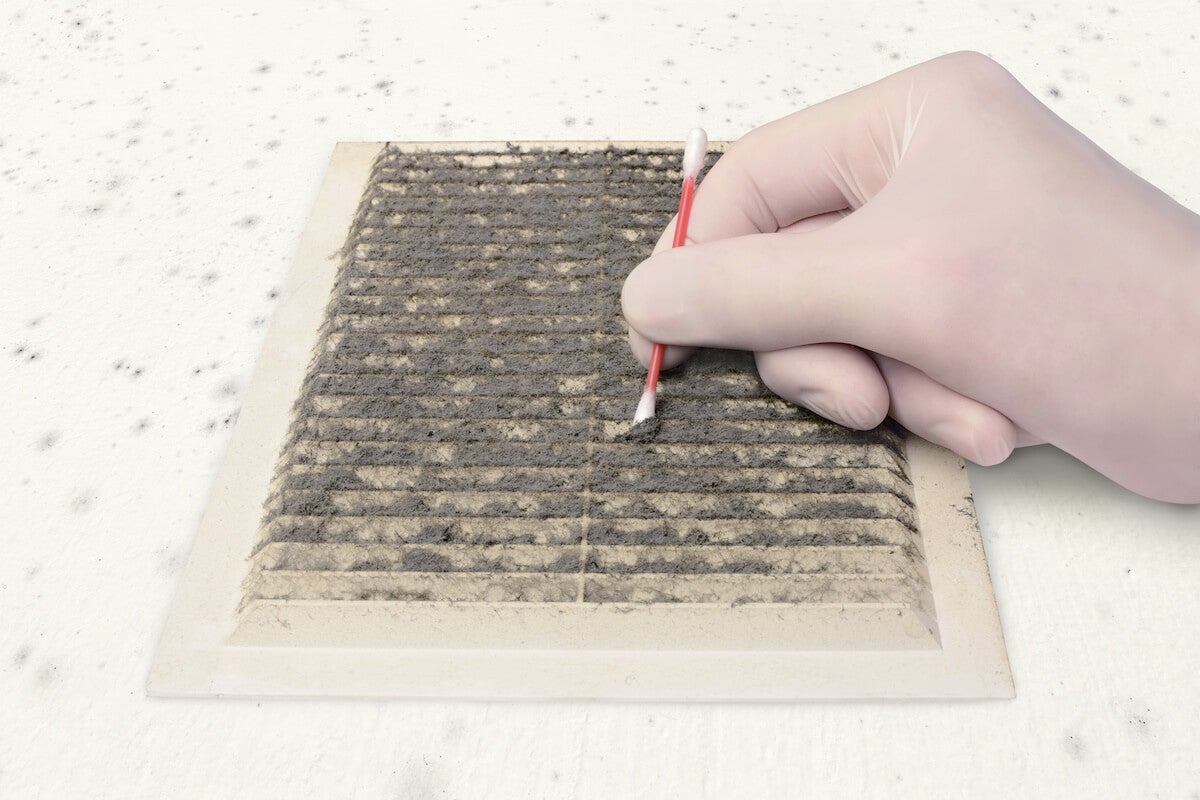
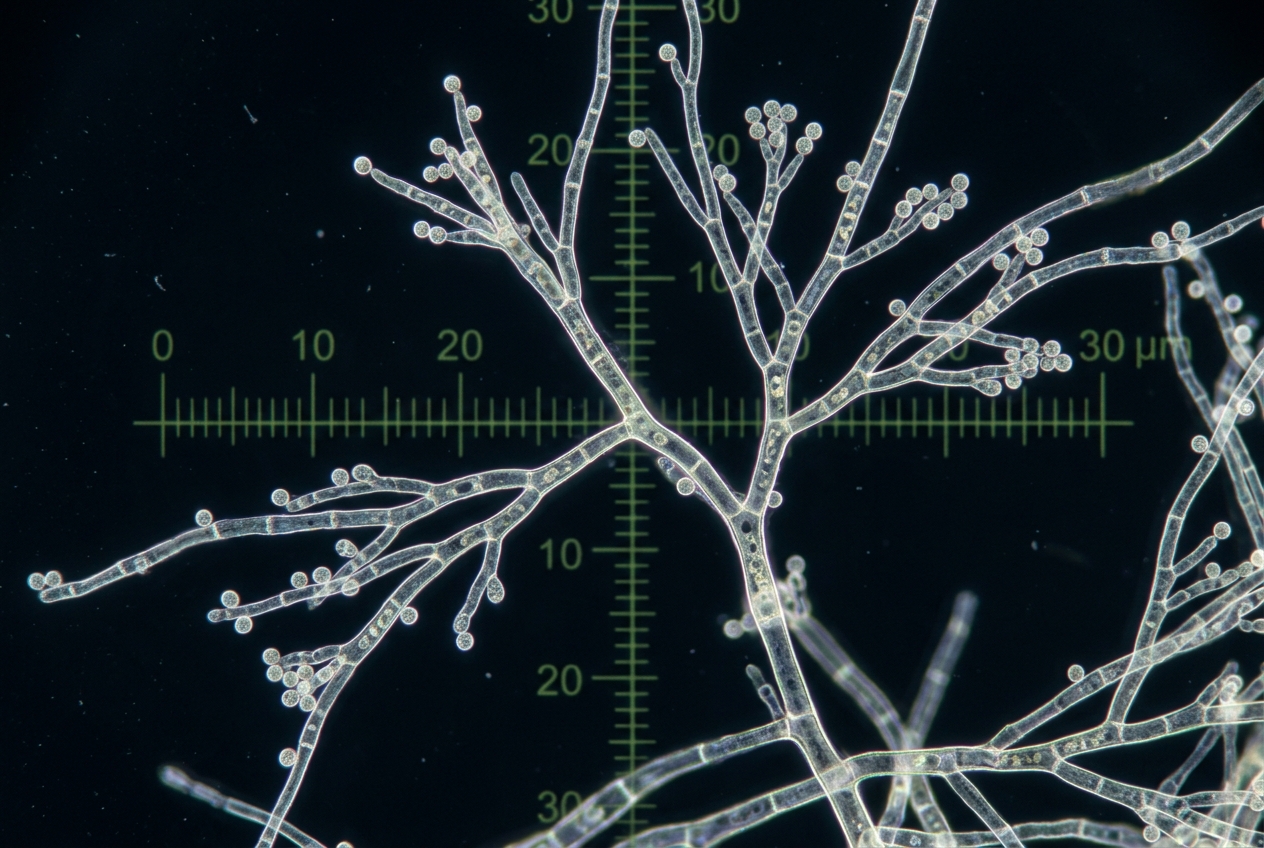
Is that Discoloration Actually Mold?
Not all stains, dust, or discoloration are mold. Guessing can lead to thousands of dollars in unnecessary destructive demolition, or worse, leaving a hazardous, toxic biological colony untreated behind drywall.
Envirogyn’s Surface Testing service takes the guesswork out of the equation. Our licensed technicians collect physical samples from affected building materials—drywall assemblies, cabinetry, framing lumber, window jambs, and HVAC supply registers—and examine them directly inside our accredited laboratory (LAB #1050) to determine exactly what species is colonizing your property.
Surface Sampling Methodologies
We deploy three rigorous, non-destructive and micro-destructive sampling protocols tailored to material porosity and location.
Direct Adhesive Lift Slide
The most common and effective non-destructive method. We apply a calibrated optical adhesive slide directly to the discolored area. The slide captures intact spores and mycelial structures without fragmentation, allowing direct mounting onto our laboratory microscope for genus determination.
Synthetic Sterile Swab
Ideal for irregular, recessed, or actively wet surfaces where tape slides cannot adhere—such as HVAC evaporator coils, condensation drip pans, drain lines, and pipe penetrations. Sterile Dacron or rayon swabs collect biological residues in protective transport vials.
Physical Substrate Extraction
When fungal contamination has penetrated deep into porous assemblies, we excise a small physical sample (drywall core, acoustic tile, carpet backing, or wood shaving). Laboratory cross-section analysis determines whether hyphae have colonized structural core matrixes.
When Surface Testing Is Critical
Direct examination provides empirical proof for insurance adjusters, title underwriters, and property managers.
Visible Growth & Staining
You see "black mold," dark spots, velvety green patches, or white powder on walls, joists, or HVAC supply vents and need definitive confirmation whether it is active biological growth or harmless carbon dust.
Real Estate Transactions
Document the exact condition of a stained area identified during a TREC home inspection or Phase I ESA walkthrough, avoiding deal-killing contingencies through accredited lab clearance.
Post-Remediation Verification
Verify that wooden structural members (studs, plates, joists) are free of residual fungal hyphae after mold remediation demolition, before enclosing with fresh drywall.
Legal & Insurance Claims
Provide court-admissible forensic laboratory proof identifying the specific fungal taxon present (e.g., toxigenic Stachybotrys chartarum versus common outdoor Cladosporium).
Surface Testing Frequently Asked Questions
Can I just use bleach?
No. Bleach only bleaches the pigment out of mold colonies on porous materials without killing the embedded root structures (hyphae). Because consumer bleach is 90% water, the chlorine rapidly evaporates into the air while the water soaks deeper into the drywall or subfloor, actually accelerating fungal amplification within 48 to 72 hours.
How long for results?
Because Envirogyn operates an accredited in-house microbiology laboratory (TDLR LAB #1050), Direct Microscopic Exams are typically completed within 24 hours of sample receipt. Same-day emergency STAT bench examination (3-hour turnaround) is available for real estate closings and emergency containment operations.
Does this test the air?
No. Surface testing exclusively identifies what is physically growing on or adhering to the specific material sampled. To determine what you and your family or employees are breathing, we recommend pairing surface sampling with a calibrated volumetric Mold Air Test (spore trap analysis).
Integrated Environmental Solutions
Mold Air Test (Spore Trap)
Quantify airborne fungal spore concentrations (Spores/m³) at 15.0 L/min volumetric flow and evaluate indoor room air against outdoor baselines under ASTM D7391.
AIR TESTING PROTOCOL →Full Mold Assessment & Protocol
Comprehensive site survey by a TDLR Licensed Mold Assessment Consultant (MAC #1544). Includes FLIR infrared moisture thermography and legal Remediation Protocol design.
FULL ASSESSMENT SCOPE →Identify the Source.
Stop guessing about that suspicious stain on your wall or cabinetry. Obtain scientific confirmation from our TDLR accredited laboratory today.
REQUEST TEST →Certificate of Mold Remediation
Ensure your property is officially certified mold-free with Texas Department of Insurance legal clearance that protects property marketability.
EXPLORE CMDR →Mold Assessment Consultant
Protecting health and capital investments through licensed environmental forensics and strict statutory firewall compliance (16 TAC § 78.54).
CONSULTING SERVICES →